
Anniversaries are one of the most reliable, and most overlooked, sales opportunities hiding in your client list. Your clients already gave you the signal. They shared the date, they trusted you with the relationship, and they're likely expecting your help when the moment rolls around again.
The difference between stores that capitalize on anniversary sales and stores that miss them usually comes down to one thing: consistency. Not creativity, not inventory, not even foot traffic. Just whether someone followed up at the right time with the right message.
That's it. Yet, most stores let these dates pass without a single touchpoint.
A simple clienteling workflow changes that. When you build anniversary outreach into your team's daily process instead of treating it like a seasonal campaign, you create a steady stream of warm, high-intent conversations that practically sell themselves.
Here's how to set it up.
Automate Anniversary Reminders So Nothing Slips Through
If you're relying on memory or sticky notes to track client anniversaries, you're going to miss sales. A good associate might remember their top ten clients' dates, but what about the other 500 people in their book? That's where automation fills the gap.
Set up automated anniversary reminders that prompt your team to reach out ahead of time. The goal isn't to fully automate the conversation. It's to make sure the conversation always starts. There's a big difference between a system that sends a generic text on your behalf and one that alerts your associate to personally reach out while there's still time to make it meaningful.
When a reminder triggers, it should create a clear next step for your associate: review the client profile, check their past purchases, look at any saved wishlists or notes, and then send a personalized message. This small habit builds a pipeline of meaningful conversations that feel thoughtful instead of transactional.
The key here is lead time. A reminder that fires the day of the anniversary is too late. Your automation should give your team at least 30 days of runway so there's room for back-and-forth, product selection, and a relaxed buying experience, not a last-minute scramble.
Turn Every Anniversary Into a Tracked Sales Opportunity
Every anniversary reminder should become a tracked sales opportunity. This is what separates casual outreach from intentional selling.
Too often, associates send a quick text, don't hear back, and move on. The conversation dies because there was never a structure around it. When you log the anniversary as a formal sales opportunity, it stays visible. It has a value attached. It moves through stages. And most importantly, it gets followed up on.
Assign a value based on typical anniversary spend, then move it through stages as the conversation progresses:
- Outreach sent
- Preferences gathered
- Options shared
- Pending decision
- Closed sale
This structure keeps your team organized and makes follow-up natural rather than something they have to remember on their own. It also gives you, as a manager or owner, real-time visibility into how much revenue is sitting in your pipeline at any given time.
When you start tracking anniversaries as opportunities, you'll quickly notice patterns. You'll see which associates are converting and which ones are stalling out at the "outreach sent" stage. You'll see which price points close fastest and which types of clients respond best. That data is incredibly valuable for coaching your team and improving results over time.
Use Wishlists and Curated Collections to Guide the Sale
Anniversary shoppers often don't know exactly what they want. That hesitation is your opportunity to guide the decision, and the easier you make it, the faster the sale moves.
If your client already has a wishlist, you're in the best possible position. Pull items they've shown interest in and present a curated selection that feels personal and considered. This immediately shows the client you've been paying attention, and it gives them a concrete starting point instead of an overwhelming set of options.
Create a few go-to anniversary collections your team can reuse: something under $500 for thoughtful everyday pieces, a tier under $1,500 for elevated gifts with presence, and a statement collection for milestone-worthy showstoppers. This lets your team respond fast without starting from scratch every time, and it keeps the client experience consistent across your staff.
This approach works because it reframes the conversation. Instead of asking an open-ended "What are you thinking?" (which puts the burden on the client to figure it out), you're giving them a clear starting point. Most clients don't want to browse endlessly. They want someone they trust to narrow it down for them. That's exactly what curated collections in Clientbook do.
Close Faster with Secure Payment Links
Once a client decides, the last thing you want is friction. And in anniversary selling, friction kills deals more often than you'd think.
The client might be shopping during their lunch break. They might be trying to keep the purchase a surprise and can't easily come into the store. They might just not have time to call. Whatever the reason, if the only way to close the sale is an in-person visit, you're going to lose a percentage of deals that were otherwise ready to go.
Payment links solve this. Send a secure link with the exact item or curated selection, and let them check out on their own time. No store visit required, no phone call, no back-and-forth about logistics.
This keeps momentum high and dramatically increases your close rate, especially in the final days before the anniversary when urgency is peaking but time is running out.
Anniversary Outreach Templates Your Team Can Use Today
Timing matters just as much as the message. Reaching out too early can feel premature, and reaching out too late means the client already solved the problem on their own, or worse, bought from someone else.
Here are three simple templates your team can deploy at key moments leading up to the anniversary.
30 Days Before
Hi [Client Name], I noticed your anniversary is coming up next month. I'd love to help you get ahead of it this year. Want me to pull a few ideas based on what they've loved in the past?
14 Days Before
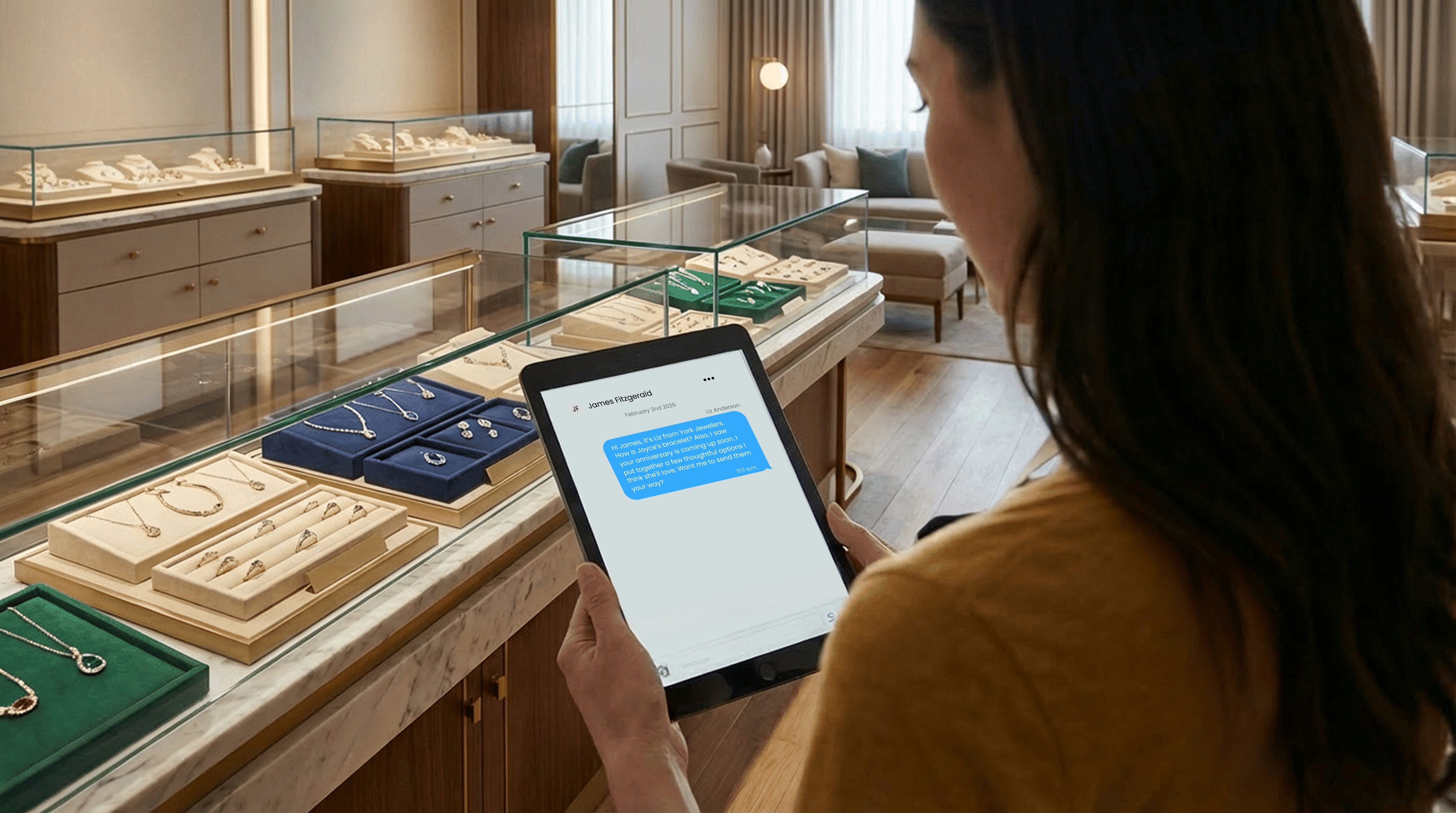
Hi [Client Name], your anniversary is coming up soon. I put together a few thoughtful options I think they'll love. Want me to send them your way?
3 Days Before
Hi [Client Name], just a quick reminder that your anniversary is right around the corner. I still have a couple of great options ready if you need something quickly, and I can send a payment link to make it easy.
These messages are low-pressure and focused on helping rather than selling. That's what gets responses. Notice that none of them lead with a product or a price. They lead with an offer to help. That distinction matters, especially with clients who might feel uncomfortable being "sold to" over text.
Your team should also feel free to adjust the tone based on the relationship. A longtime VIP client might get a more casual, familiar message, while a newer client might need a slightly more polished touch. The templates are a starting point, not a script.
Make Anniversary Selling a Daily Habit, Not a Seasonal Campaign
Anniversary clienteling works best when it becomes part of your everyday process, not something you think about a few times a year.
The stores that consistently win at this aren't running special anniversary promotions or dedicating a week to outreach. They're just doing it every day, as part of their normal routine. An associate opens their dashboard in the morning, sees three anniversary reminders, and works through them before lunch. That's it. No big initiative required.
Encourage your team to capture anniversary dates during every client interaction, add notes after each conversation, and build wishlists during routine appointments. When your associates treat every reminder as a real revenue opportunity rather than a task to check off, the results compound. Over time, your best sales are already in motion before you ever think about a marketing campaign or promotion.
This is also where management plays a role. If you're reviewing your team's pipeline regularly and asking about upcoming anniversaries, it signals that this matters. It becomes part of the culture, not just another thing on a checklist.
You Already Have Everything You Need
You don't need more foot traffic to grow anniversary sales. You don't need a bigger marketing budget or a new campaign idea. You need a reliable way to act on the client data you already have.
When you combine automated reminders, structured sales tracking, curated product recommendations, and frictionless checkout, you create an experience that feels personal and effortless for your clients. They get a thoughtful message at the right time, a curated set of options that actually makes sense for them, and a simple way to buy, all without stepping foot in the store.
That's what keeps clients coming back, year after year.