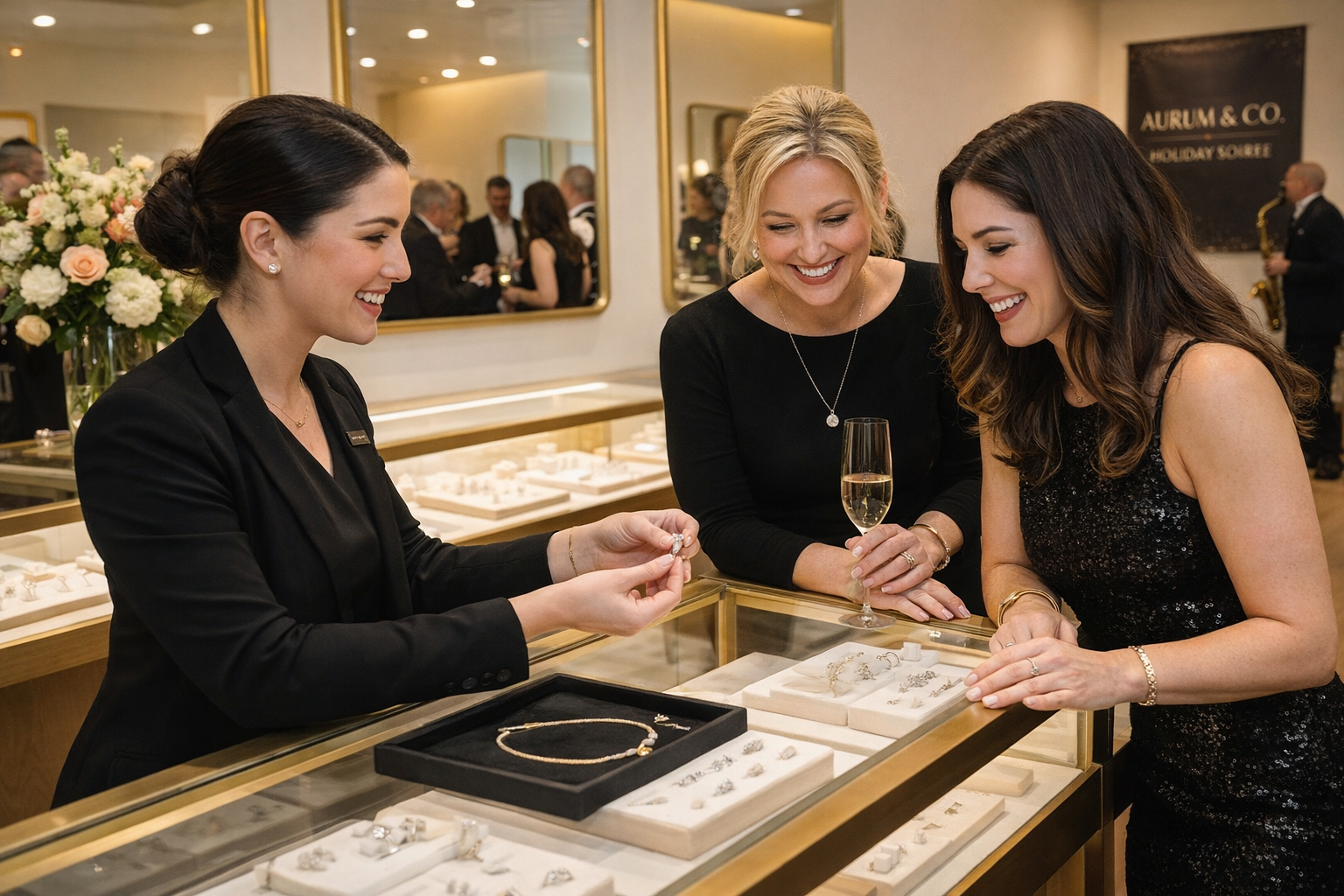

Appointments and events are two of the most effective ways independent jewelers drive conversion and revenue in store.
An appointment is a scheduled, intentional visit tied to a client profile. An event is a planned traffic driver built around a product, brand, or occasion. When structured correctly, both outperform passive walk-in traffic.
Appointments typically convert 2 to 3 times higher than unplanned visits.
Events create urgency and give clients a reason to return. Combined, they form a repeatable growth engine.
If you want more predictable revenue, start by tightening how you run both.
Want to see how structured appointments look inside a jewelry CRM? Explore examples in our Help Center.
Why Appointments Increase Conversion
Appointments work because they create intent.
When a client books time:
- They commit to showing up.
- They arrive focused.
- Associates can prepare in advance.
Preparation matters. If you review purchase history, ring size, wishlist items, and life events before the client walks in, the conversation changes.
Appointments tied to client profiles consistently outperform inbox-based scheduling because associates walk in prepared.
How to Structure Jewelry Events for Revenue
Events are not just parties, they’re sales campaigns.
A profitable jewelry event includes five core elements:
- Clear revenue goal
- Curated invitation list
- Guest capture at the door
- Tracked sales opportunities
- Defined follow-up cadence
Most stores focus on catering and décor. The highest-performing stores focus on follow-up, too.
Choose a Specific Revenue Goal
Examples:
- Move aged bridal inventory
- Drive anniversary upgrades
- Launch a designer collection
- Book post-event appointments
A vague goal leads to vague results. It’s important to have a specific goal in mind to see actionable, attributable results.
Open House vs Appointment-Based Events
There are two primary structures.
Open House
- Flexible arrival times
- Strong social energy
- Good for brand exposure
Appointment-Based Event
- Scheduled time blocks
- Associate preparation required
- Higher conversion per guest
Clear statement: Appointment-based events typically produce higher average transaction value because each guest receives dedicated time.
Many successful jewelers blend both: open browsing plus optional private appointments.
Guest Capture Is Non-Negotiable
Every event should create new client profiles.
You need:
- Name
- Mobile number
- Occasion or shopping intent
- Assigned associate
Paper sign-in sheets are inconsistent. Digital capture tools tied to your CRM centralize client data and protect the relationship if staff turns over.
No capture means no follow-up, and no follow-up means lost revenue.
Track Sales Opportunities After the Event
Revenue rarely ends the night of the event.
Serious interest should become a tracked sales opportunity that includes:
- Item discussed
- Budget range
- Timeline
- Next contact date
Jewelry retailers managing structured sales opportunities close more deals post-event than stores relying on memory.
This is where conversion is won.
The Follow-Up System That Drives Revenue
If a client does not purchase at the event:
Day 2
Send a thank-you message with photos of pieces tried.
Day 5
Share availability or an alternative option.
Day 10 to 14
Create urgency with limited availability or event pricing reminder.
Hope is not a follow-up strategy.
Whether manual or automated, it’s your associate’s consistency that determines results.
How Appointments and Events Work Together
Events generate traffic, and then appointments convert that traffic.
Smart stores use events to:
- Book private consultations
- Drive bridal styling sessions
- Schedule anniversary upgrades
- Fill slow weekdays
This structure turns one weekend event into 30 days of follow-up revenue.
Manual vs Systemized Event Management
You can:
- Pull guest lists from POS reports
- Text invitations individually
- Track RSVPs on paper or in spreadsheets
- Follow up from personal phones
Many jewelers do.
But cracks appear with missed follow-up tasks, lost client notes, no attribution reporting, or associate turnover taking relationships with them
A centralized clienteling system ties together appointments, events, guest capture, and revenue tracking in one place.
That visibility changes how managers coach and forecast.
Frequently Asked Questions
Do appointments really convert better than walk-ins?
Yes. Across retail, scheduled visits convert at significantly higher rates because intent and preparation are built in.
How many guests should a jewelry event invite?
Quality beats quantity. A curated list of 75 to 150 targeted clients often outperforms broad blasts to thousands.
Should every event include appointments?
Not required, but recommended! Offering bookable time slots increases associate preparation and improves conversion rates.
The Bottom Line
Appointments create intent.
Events create urgency.
Follow-up creates revenue.
When you combine structured appointments, disciplined guest capture, and tracked sales opportunities, you build predictable growth.
You can run this manually - or, you can centralize it inside a jewelry-focused clienteling platform designed for appointments and events.
Ready to see how it works in practice?
Book a demo at https://clientbook.com/demo