You're doing everything right.
Your team is texting customers. They're tracking preferences in your CRM. They're building relationships, sending birthday messages, following up after purchases. The clienteling playbook says your strategies should be working.
And they are working, sort of.
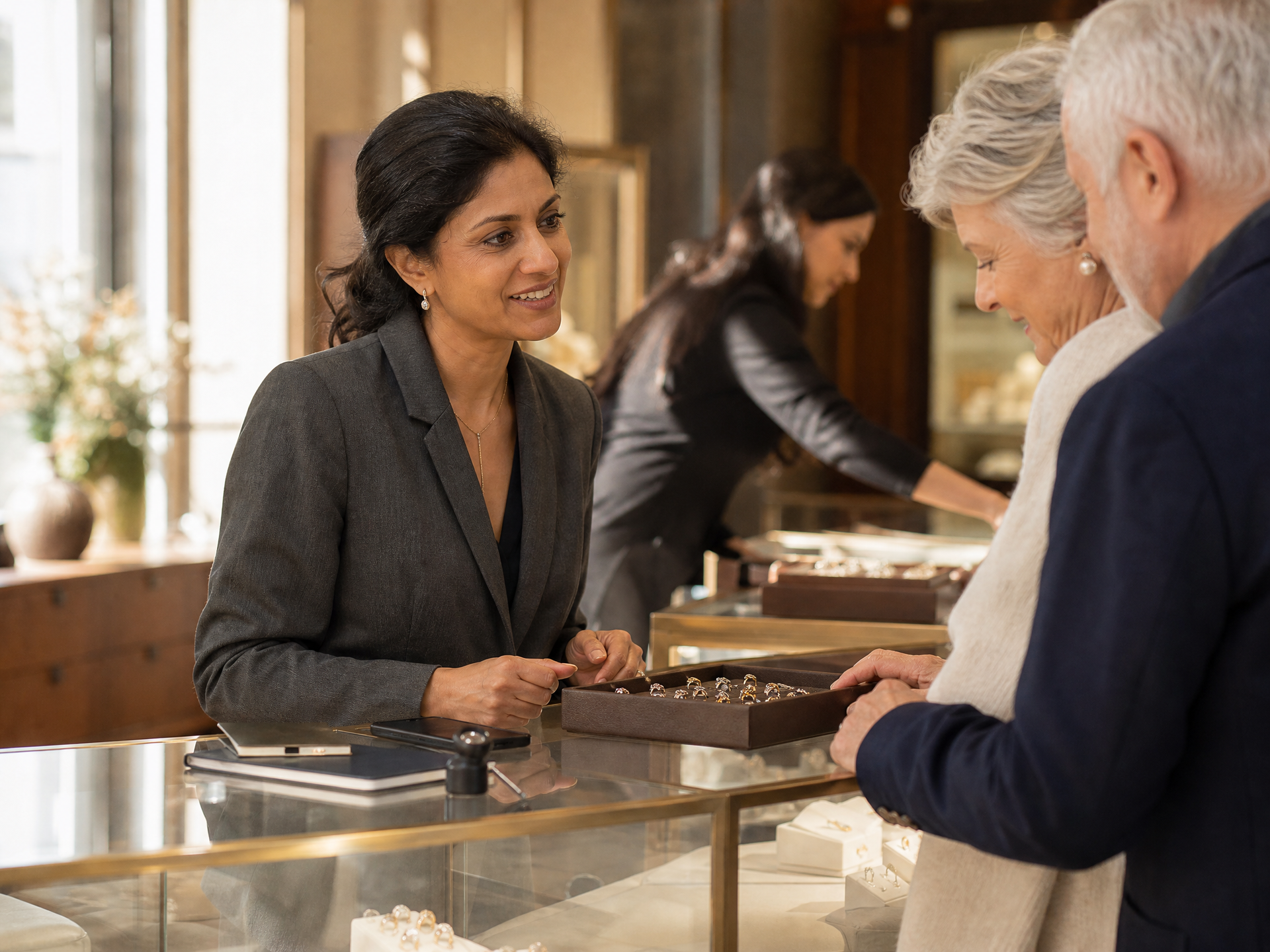
Great conversations are happening. Your associate showed her that stunning anniversary necklace. She loved it. She said she'd "think about it" and "be back soon." Your team sent a thoughtful follow-up text. She replied with a heart emoji.
Then... nothing.
She didn't come back. The necklace sold to someone else. Your associate moved on to the next customer.
This happens dozens of times a month at your store. Maybe more.
The problem isn't your clienteling strategy. The problem is there's a missing step between the conversation and the sale. You're building relationships, but you're not capturing intent. You're staying top-of-mind, but you're hoping they remember to come back instead of making sure they actually do.
You need appointments.
Why Appointments Beat Walk-Ins Every Time
Walk-ins are unpredictable. Appointments are intentional.
When someone books time with your team, they're not browsing. They're not killing time at the mall: they're showing real purchase intent. They've cleared space in their calendar. They're mentally preparing to spend money.
Think about who books appointments at jewelry stores: proposal shoppers who need the perfect ring, anniversary planners who need a gift before the weekend, upgrade buyers who know exactly what they want and just need to see it in person. These are people ready to buy.
The stores winning right now aren't sitting around waiting for foot traffic. They're bringing customers back in on purpose. They're transforming "I'll think about it" into "Let's book a time for you to see it again." They're turning casual interest into scheduled appointments that actually show up on the calendar and close at the register.
Your competitors are doing this. The question is: are you?
The Hidden Cost of Disconnected Systems in Retail
Here's what most retailers are dealing with when it comes to appointments:
Requests come through a dozen different channels. Someone calls the store line. Another books through your website form. A third texts the associate directly. All of these appointments live in different places with no central view of what's actually happening.
On top of that, your associates are flying blind. When that appointment walks in the door, your team is scrambling. They don't know her purchase history. They don't remember what she was interested in last time. They don't have her wishlist pulled up. The appointment starts with "So what brings you in today?" instead of "I have those three white gold settings you loved last time ready for you to try on."
Not to mention, sales tracking can be a mess. Did that $8,000 sale come from an appointment or was she just walking by? Nobody knows. You can't figure out which appointment types actually convert. You can't tell which associates are best at closing booked visits.
Even if you do have someone book an appointment, no-shows can eat up your schedule. Someone books for Saturday at 2pm. They don't show up. Your associate blocked that time off, but they’re busy. No reminder was sent. No confirmation text went out. Your team is just hoping people remember.
These aren't small inconveniences. This is thousands of dollars in lost revenue every month. These are customer experiences that feel generic instead of personalized. This is your best associates spending half their time on logistics instead of selling.
Generic tools can't fix this because they don't understand your business.
Calendly doesn't know her ring size. It can't pull up her last three purchases or surface the items she's wishlisted. Podium can send appointment reminders, but it has no idea that the appointment resulted in a $10,000 sale. Your iPhone notes app with 400 entries labeled "guy - gold chain maybe?" definitely isn't a strategy.
You need something built for retail. You need appointments that live inside your CRM.
How Retailers Are Using Appointments
The stores crushing it with appointments aren't doing anything complicated. They're just using Clientbook Appointments the way it was designed.
They book the next visit while the customer is still excited. That guest admiring the $5,000 necklace? Instead of "let me know if you want to come back," your associate says: "Your anniversary is in three weeks, right? Let me book you an appointment so we can have this and a few other pieces set aside for you to try on together." Right there in the client profile. Thirty seconds. Done. Now she has a reason to come back and a specific time to do it.
They walk into every appointment fully prepared. Because appointments live in Clientbook, your team sees everything before the client walks in. Purchase history, wishlisted items, past notes, style preferences, and conversation history. The appointment doesn't start with small talk and discovery. It starts with "I pulled those pearl earrings you added to your wishlist last month, plus I found this matching bracelet that just came in." That's the difference between a good experience and a great one.
They let automation handle the busy work. Set it once and forget it. Clientbook sends confirmation texts when the appointment is booked, changed, or canceled. Reminder texts go out 24 hours before. Your team doesn't have to chase anyone down and they don't manually text every client because the system handles it. Associates focus on what they're actually good at: selling.
They finally know what's working. Your POS integration automatically connects sales to the appointments that generated them. For the first time ever, you can see real numbers. Which appointment types convert best? Which associates close most effectively? What's the average sale from an in-person consultation versus a ring sizing versus a custom design appointment? Now you know.
They manage the whole team from one dashboard. Open up Clientbook and see every appointment across your entire store. Who's booked? When? With which associate? Which clients haven't scheduled their follow-up yet? No more "I thought Sarah was handling that." No more double-bookings. No more scrambling. One unified view of everything.
This is what appointment management looks like when it's built for retailers instead of dentists.
Appointment Scheduling ROI: What the Numbers Show for Jewelry Stores
Let's talk ROI.
Appointment conversions run 40-60% higher than walk-in traffic. Why? Because the customer already decided they're interested before they scheduled. The appointment is about closing, not discovering.
Average transaction values on appointments trend 25-35% higher. Again: intent. Someone booking an appointment for "custom engagement ring consultation" is spending more than someone who wandered in to browse.
Let's do the math: If you're currently doing $100,000 a month and you add 40 appointments that convert at $2,500 average sale with a 50% close rate, that's $50,000 in additional monthly revenue, all from a feature that takes your team about ten minutes to learn.
The stores not using this are leaving massive revenue on the table.
Choosing the Right Retail Appointment Scheduling Software
Here's what you need to know about choosing clienteling software with built-in appointment scheduling:
Look for CRM integration. Your appointment booking software should live inside your existing retail CRM, not as a separate tool. This means customer profiles, purchase history, wishlists, and preferences are instantly accessible when booking and preparing for appointments.
It takes about ten minutes to set up. Your team doesn't need training or a user manual. If they can use Clientbook's client profiles, they can book an appointment. It's that simple!
It works with your existing workflow. You're not changing how you do business. You're just adding a step between "great conversation" and "hoping they come back." Now you secure the visit while they're still excited.
POS integration is essential. Your appointment software should automatically connect sales to the appointments that generated them. Sales attribution happens automatically. You don't manually track which appointments converted. The retail CRM does it, and you just look at the reports.
Luxury retail clients expect premium experiences. They get confirmation texts. Reminder texts. Their associate is actually prepared when they show up with full access to their customer profile. It feels premium. It feels intentional. That's the experience your clients expect when they're spending thousands of dollars.
Stop Hoping. Start Booking.
You've invested in clienteling. You've trained your team on personalization. You've bought the CRM. You're doing the work.
But if you're not converting those great conversations into actual appointments, you're doing half the job. You're building relationships without capturing the sale. You're staying top-of-mind without securing the next visit.
Your competitors aren't making that mistake. They're using Clientbook Appointments. They're booking follow-ups right from the client profile. They're walking into appointments prepared. They're tracking what works. They're closing at higher rates.
The gap between a good clienteling strategy and a great one isn't more data or better follow-up texts. It's appointments. Scheduled, confirmed, revenue-generating appointments.
Elite Plan users already have this, they're already using it, and they're already seeing the results.
The question is: how much longer are you going to wait?
Ready to stop missing sales?
Book a demo to see how Clientbook Appointments turns your clienteling conversations into booked visits and actual revenue.