%202%20(2).png)
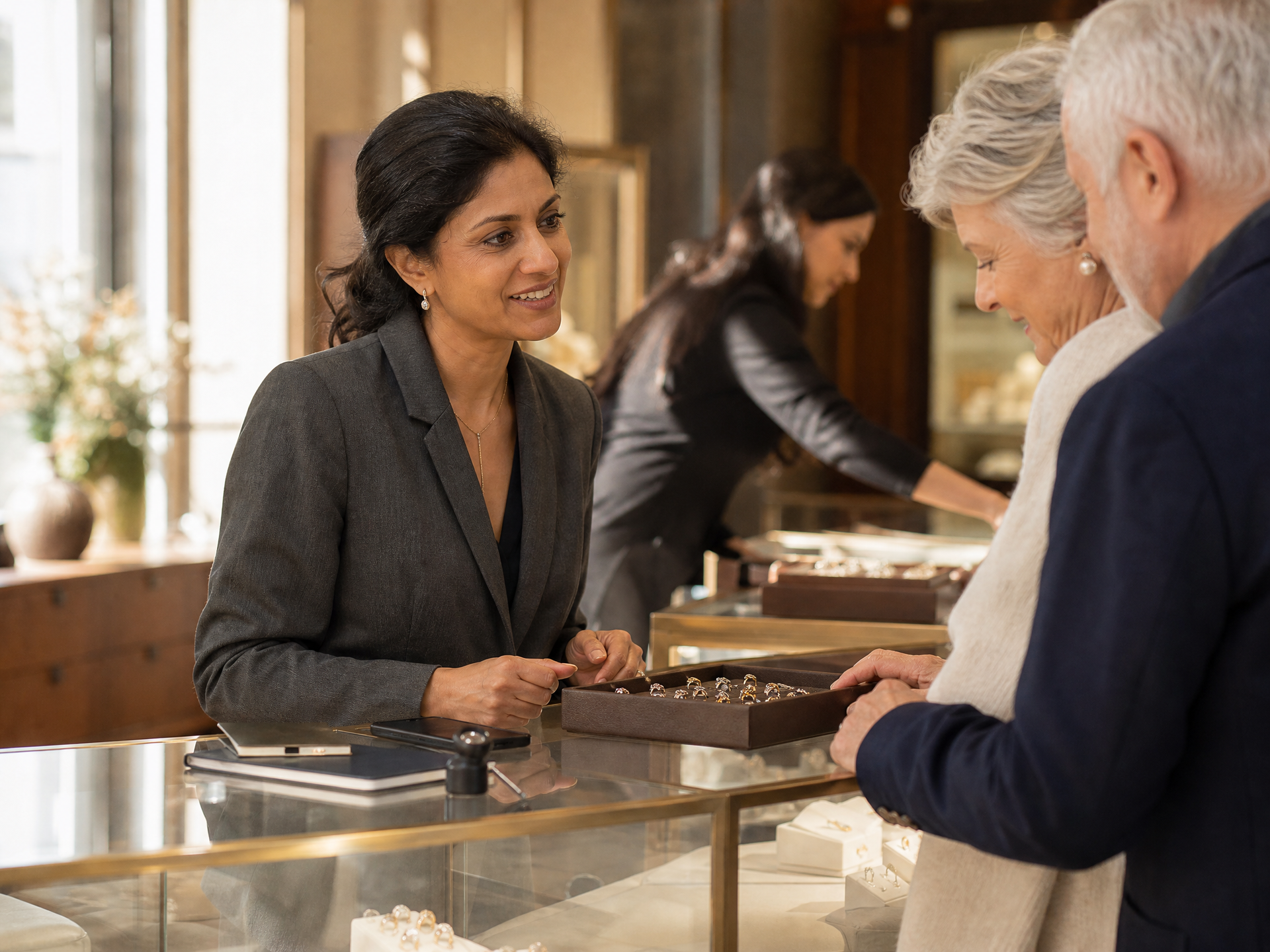
Walk into a strong jewelry store as a repeat client and something quiet happens. The associate greets you by name, asks how the wedding went, and mentions the sapphire pendant you lingered over in March is back in your size. None of that is charm. It is memory, organized and acted on at the right moment.
That is the craft behind how high-end jewelry stores personalize the shopping experience for repeat customers. From the client's side of the counter it looks effortless. Underneath is a specific set of habits: what the store writes down, how it reads purchase history, how it reaches out between visits, and what keeps it all running when the associate who knows you best has the day off.
What the Best Stores Remember About Every Client
Personalization starts at the counter, while the conversation is still warm. Top stores keep a client file that goes far beyond a name and a phone number:
Sizes: ring size, the spouse's ring size, bracelet length, preferred chain lengths
Metals and stones: yellow gold or platinum, colored stones or strictly diamonds, any metal sensitivities
Style: minimal or statement, vintage or modern, everyday pieces or occasion pieces
Dates: wedding anniversary, birthdays, graduations, the moments that create buying occasions
The gifting graph: who this client buys for, a spouse, a mother, two daughters, and what each of those people loves
The wishlist: the exact pieces the client tried on and left behind
Purchase and service history: every sale, repair, resize, and appraisal, with dates
None of this is exotic. Jewelers have kept versions of this file on index cards and in paper client books for generations, and the types of customer data worth tracking have not changed much. What separates the top stores is coverage and discipline. They capture preferences for every client, not just the memorable ones, and they keep the file where the whole team can reach it. When Wilson Diamonds got deliberate about capture, contact capture went from under 5 percent to 90 percent. Everything else in this article depends on that number: you cannot personalize an experience for a client you never captured. Once the file exists, the daily habit is to track what your jewelry customers like and send them relevant product suggestions.
Purchase History Is a Calendar of Future Moments
A dated purchase history is more than a record. It is a forecast. Nearly every transaction points at a future moment when a personal touch will land:
An engagement ring sold in June points to wedding bands, then a first anniversary the following June.
Diamond studs bought five years ago point to an upgrade conversation.
A watch purchase points to a service reminder, and eventually the second watch.
A milestone gift for a spouse points to the same date next year, at a level the price history already suggests.
High-end stores work this calendar deliberately. Three to four weeks before a wedding anniversary, the associate reaches out and references the original piece, a signal that the store remembers what the date means. The history also guides taste: there are five telling things you can learn from a client's purchase history, including what a client will never buy, which protects the relationship from tone-deaf suggestions. Service belongs on the same calendar. An invitation to bring the ring in for a complimentary cleaning before the anniversary dinner is personalization too, and it reliably produces a visit. For the step-by-step version, follow an anniversary clienteling workflow that turns client milestones into repeat sales.
Catalog-Image Texting That Feels Personal
Between visits, the outreach channel top stores lean on is the one-to-one text from a named associate, with a picture. Not a blast. Something closer to this:
Hi Sarah, the new Gabriel arrivals came in this week and one of the stacking bands is nearly identical to the ones you tried on in April. Want me to set it aside for the weekend?
Three details make a message like that land as thoughtful instead of promotional. It comes from the associate the client knows, not a marketing sender. It references something true from the client's file: the wishlist item, the metal preference, the date. And it carries one image of one specific piece, because the goal is a recommendation, not a catalog dump. Image quality carries more weight in jewelry than almost any other category, which is why associates need tools that let them share brand catalog images via text: official designer photography from brands like Tacori and Gabriel instead of a phone photo shot through a glass case.
Appointments and Private Viewings
When a text turns into interest, the high-end move is to book a time instead of hoping for a walk-in. An appointment changes the character of a visit. The associate opens the client file before the door chimes, the wishlist pieces are pulled and polished, the correct sizes are on the tray, and the first five minutes are about the client, not a search through inventory.
For milestone purchases, strong stores go a step further with a private viewing: a reserved hour, sometimes after closing, a velvet tray prepared for one person, perhaps a glass of champagne. The gesture costs the store almost nothing, and what the client feels is the preparation, the sense that the store assembled this hour around them. It is also good commerce: appointments and events increase conversion and revenue for jewelers because a prepared, unhurried conversation closes at a rate a busy Saturday floor never will.
Events That Treat Top Clients Like Insiders
Trunk shows, designer visits, and preview nights extend the same idea to a room of people, and the personalization lives in the guest list. Rather than inviting everyone, top stores segment: clients who own the visiting designer, colored stone lovers when the sapphire collection arrives, top lifetime spenders for an anniversary evening. The invitation arrives as a personal text from the client's own associate, framed as a first look, and the follow-up references the pieces each guest tried on. Done this way, sending personalized event invitations to your top clients feels like membership in an inner circle, which for a luxury client is the point.
Where AI Recommendations Fit
AI's role here is narrower and more useful than the hype suggests. It does not replace the associate's relationship. It protects that relationship from the calendar. AI recommendations act as the store's memory prompter: they surface which clients are due for a touch, flag the anniversary three weeks out, suggest what to mention based on the wishlist and purchase history, and draft a message the associate can edit into their own voice. The associate stays the author of the relationship; the AI makes sure no client goes quiet by accident. For the full picture, read our complete guide to how AI improves client communication in jewelry retail.
The System That Makes It Stick When Your Star Associate Is Off
Here is the real test of a store's personalization: a top client walks in on a Tuesday and the associate who knows her is off. In stores where client knowledge lives in one person's head or one paper book, the experience collapses into polite small talk with a stranger. Jewelers tell us the same story all the time: they know they should be clienteling consistently, but the floor stays busy, everyone is serving whoever walks in the door, and client knowledge stays locked up with whoever holds the relationship.
The fix is structural, not motivational. Shared digital client profiles mean any associate can open the file and continue the conversation mid-sentence: the sizes, the spouse, the wishlist, the last visit note. A POS integration keeps purchase history flowing in automatically instead of depending on end-of-day data entry. Manager visibility turns follow-up into a team habit rather than a personality trait one star has. The stores that operate this way post numbers like Adorn's, where 54 percent of associates clientele daily and 86 percent at least twice a week. It also answers the question every owner eventually faces about what happens to your clients when your best sales associate quits: relationships that live in the store's system stay with the store. Building that system is exactly the job of jewelry store clienteling software.
Questions Jewelers Ask About Personalizing for Repeat Customers
How do stores keep spouse names and anniversaries current without asking every visit?
Capture them once, at the sale, and let systems carry them forward. Anniversary and spouse details often already exist in POS records; the headache retailers describe most is that the information never reaches the tool associates actually use. A clienteling platform that syncs with the POS keeps the spouse, the date, and the purchase tied to one profile so reminders fire without anyone re-asking.
Can a wishlist include pieces a client saved on our website?
It should. Retailers increasingly collect wishlist data online and want it beside the in-store notes. The rule is one profile per client: a wishlist split between a website plugin and an associate's memory gets acted on in neither place. Bring saved pieces into the client's profile so they trigger the same personal follow-up an in-store try-on would.
How do stores run a storewide promotion without losing the personal feel?
Segment before you send. A store anniversary sale can still go out as a targeted message: past buyers of the featured designer get one version, bridal clients another, and anyone who asked not to be contacted is excluded automatically. Add an image and a first name and a mass message reads like a note. One generic blast to the entire list is how a store trains its best clients to ignore its texts.
How do high-end stores manage waitlists for hard-to-get pieces?
For allocation-driven products like certain Swiss watches, stores flip the wishlist into a waitlist. Each interested client gets tagged with the exact model and the date they asked. When a piece arrives, the associate can see at a glance who has waited longest and reach out within minutes, exactly the moment a repeat client decides this is their store for life.
See the Whole System Working Together
Every tactic in this article runs on one asset: a client file the store actually keeps and uses. Clientbook was built to be that file for jewelry stores, with wishlists, gifting details, catalog image texting, appointments, and AI recommendations on one profile the whole team shares.
Book a demo at clientbook.com/demo and ask to see a repeat client's profile end to end, from first capture to anniversary follow-up.
Related reading:
Anniversary Clienteling Workflow: How to Turn Client Milestones into Repeat Sales
How to Send Personalized Event Invitations to Your Jewelry Store's Top Clients
How to Track What Your Jewelry Customers Like and Send Them Relevant Product Suggestions